Seasonal Event Tie-Ins and Their Effect on User Progression Through Layered Incentive Programs in Web-Based Gaming Portals
Written by Hugo Hansen · Jul 31, 2026
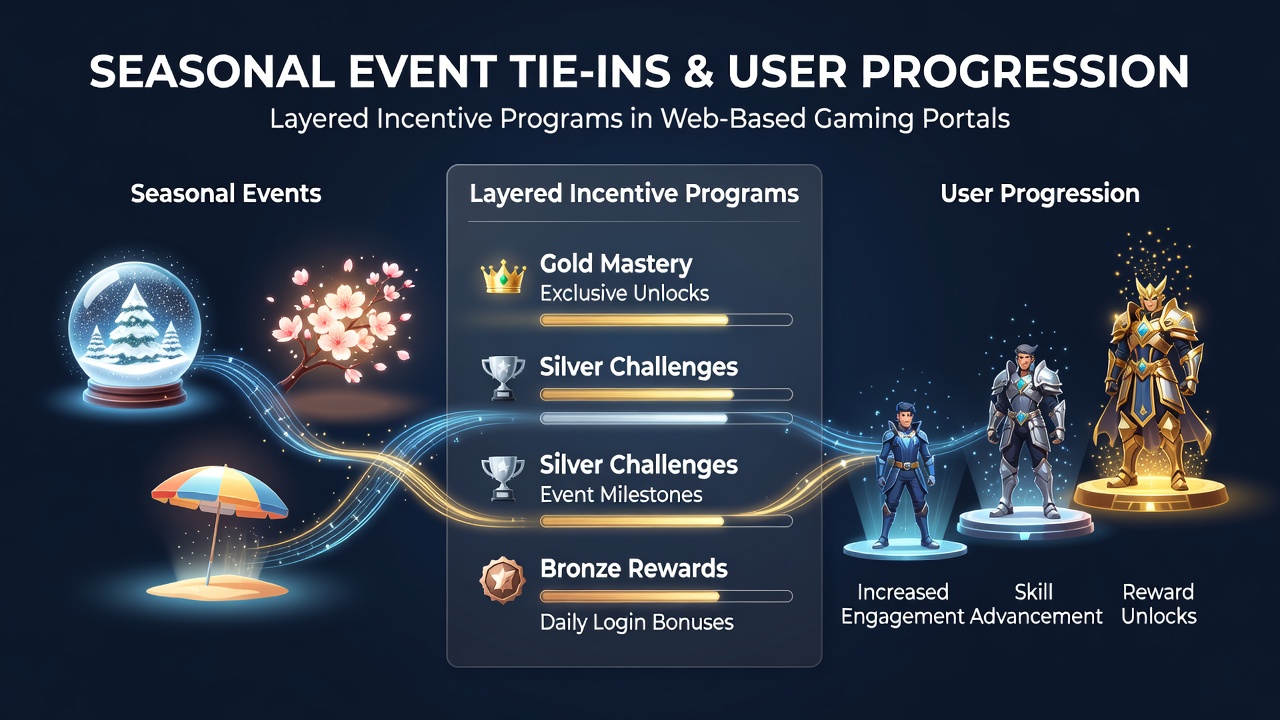
Seasonal Event Tie-Ins and Their Effect on User Progression Through Layered Incentive Programs in Web-Based Gaming Portals
Seasonal event tie-ins integrate holiday themes and limited-time challenges directly into the core mechanics of web-based gaming portals, where users advance through multi-tiered reward structures that track activity across daily logins, wager volumes, and task completions. These alignments create temporary boosts to point accumulation rates, unlock exclusive milestone rewards, and accelerate movement between incentive layers that range from entry-level access to premium status benefits. Data from industry tracking shows that participation spikes occur when portals overlay summer festivals or cultural observances onto existing progression ladders, leading to measurable shifts in user retention patterns during those windows.
Mechanics of Layered Incentive Integration
Layered programs operate on cumulative metrics that include deposit frequency, session duration, and completion of event-specific objectives, with seasonal overlays adding multipliers or bonus tiers that reset or carry forward depending on the portal's design. Observers note that July periods often coincide with mid-year resets or expansions, and in July 2026 several major portals introduced event nodes tied to global athletic competitions that fed directly into tier advancement tracks. Users who engaged with these nodes recorded faster completion of mid-level requirements, while those who skipped the seasonal components progressed at baseline rates without the added accelerators.
Portals structure these systems so that event participation feeds into both short-term and long-term ladders, meaning a single seasonal challenge can satisfy criteria for multiple incentive layers simultaneously. Research indicates that when objectives align with broader seasonal narratives, such as resource gathering during harvest themes or competitive brackets during tournament seasons, completion rates rise because the tasks feel contextual rather than arbitrary. This synchronization reduces friction in the progression path and allows users to accumulate the points or badges needed for tier elevation without separate grinding sessions.
Observed Patterns in User Advancement
Tracking across multiple portals reveals consistent upticks in tier transitions during seasonal windows, with data showing that users who complete at least three event-linked tasks advance one full layer more quickly than non-participants over the same calendar period. These patterns hold across different game categories, from automated reel formats to interactive card environments, because the incentive architecture remains unified. Portals that extend seasonal events across several weeks rather than single weekends sustain higher cumulative activity, as users pace their engagement to maximize the available multipliers before the window closes.
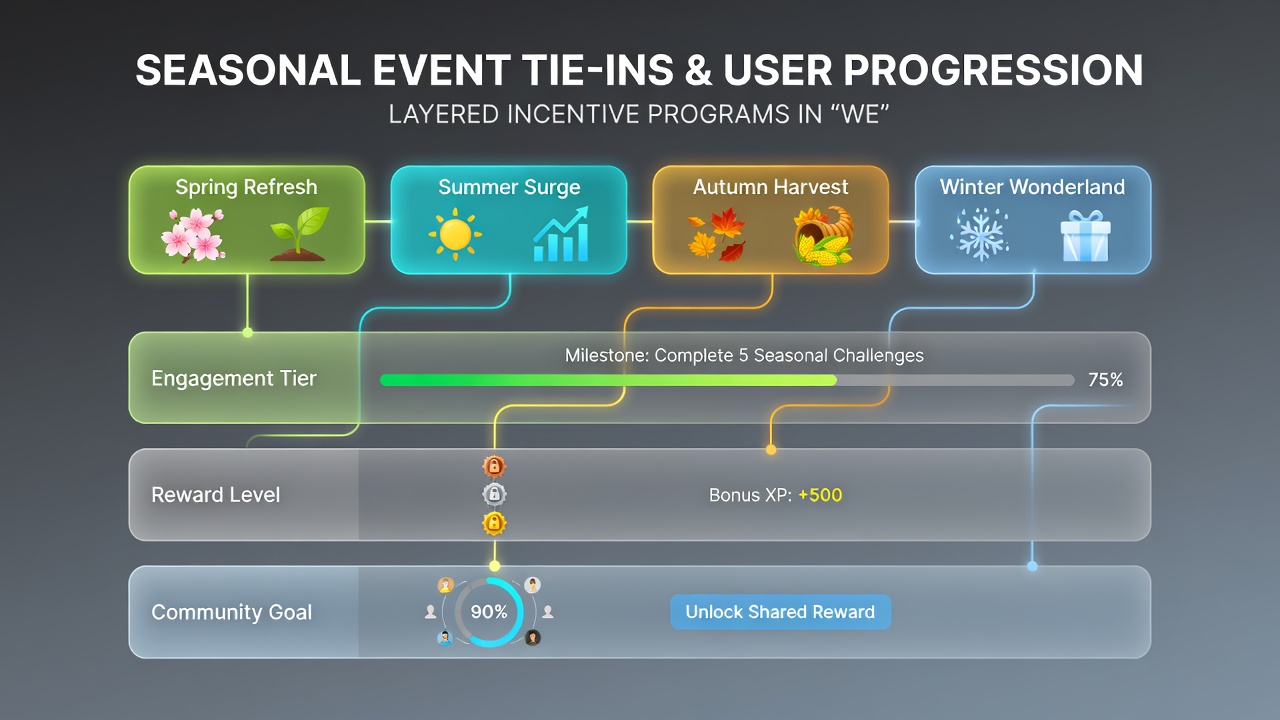
What's interesting is how carry-over mechanics influence long-term behavior: points earned during one seasonal event sometimes convert into permanent tier credits, creating a bridge between temporary campaigns and enduring status levels. Analysts tracking these conversions find that users who treat seasonal events as progression opportunities rather than isolated diversions maintain steadier activity curves across the year. In contrast, portals without strong seasonal integration show flatter progression distributions, with fewer users reaching upper tiers within comparable timeframes.
Regional Regulatory Context and Reporting Standards
Regulatory frameworks in various jurisdictions require transparent disclosure of how seasonal promotions interact with player reward systems, and organizations such as the American Gaming Association compile annual summaries that include metrics on event-driven engagement. In other regions, government bodies like Australia's National Consumer Protection Framework monitor the frequency and structure of these tie-ins to ensure they align with responsible gaming guidelines. Academic studies from institutions examining digital entertainment ecosystems further document that well-designed seasonal layers correlate with increased session frequency without necessarily elevating risk indicators when clear opt-in structures are present.
Portals adapt these requirements by separating event rewards from core wagering requirements, allowing users to progress through incentive layers via non-monetary tasks during seasonal periods. This separation appears in system logs as distinct tracking categories, which helps maintain compliance while still delivering the engagement lift operators seek. Figures released through trade associations indicate that portals employing such hybrid models report stable user bases across seasonal cycles rather than sharp spikes followed by drop-offs.
Conclusion
Seasonal event tie-ins function as accelerators within layered incentive programs by mapping time-limited objectives onto existing progression metrics, producing measurable shifts in advancement speed and retention duration across web-based gaming portals. The integration relies on unified tracking systems that convert event participation into tier credits, with patterns holding steady through different calendar windows including those observed in July 2026. Regulatory reporting from multiple regions continues to shape how these mechanisms are presented, ensuring that the factual pathways from seasonal activity to sustained user progression remain documented and accessible.