Interweaving App Navigation Patterns with Cumulative Perk Acquisitions in Mixed Format Digital Wagering Platforms
Written by Xander Meier · Aug 14, 2026

Interweaving App Navigation Patterns with Cumulative Perk Acquisitions in Mixed Format Digital Wagering Platforms
Digital wagering platforms that combine reel-based games with card-driven formats rely on layered navigation systems to guide users through sequences of play while tracking cumulative rewards, and developers have refined these structures over successive updates to accommodate both quick sessions and extended engagement cycles. Observers note that swipe gestures and tabbed menus often serve as primary connectors, allowing seamless transitions between automated reel mechanics and live-dealer table options without resetting progress indicators for accumulated perks.
Core Navigation Structures in Hybrid Environments
Platform architects organize menu hierarchies so that users encounter reward meters immediately upon switching game categories, which means a player completing a series of spins can view updated tier points before entering a card-based lobby. Data from multiple operators shows that thumbnail previews embedded in navigation bars increase the frequency of cross-format movement, and these previews display real-time perk balances that adjust according to activity logged in either game type. Researchers tracking user flows in 2025 documented average session lengths extending when navigation included persistent side panels that listed upcoming milestones tied to total wagers across formats.
Integration of Perk Tracking with User Pathways
Systems record every transition between reel and table sections, assigning weighted values to each movement so that cumulative acquisitions reflect both volume and variety of play. One documented approach places a collapsible progress overlay that remains accessible via a single-tap icon, updating automatically when a user moves from a five-reel configuration to a multi-hand poker variant. Figures released by the Canadian Gaming Association indicate that platforms incorporating such overlays recorded higher retention rates during the first half of 2026, particularly among accounts that accumulated tier credits through mixed-format sequences rather than single-category repetition.
Notifications triggered at set thresholds appear within the navigation rail itself, prompting users to explore alternate game sections to unlock the next reward bracket. This design choice keeps the focus on continued movement through the app while reinforcing the connection between navigation choices and long-term perk growth. As of August 2026, several major operators introduced predictive path suggestions that highlight underused sections of the interface based on prior perk accumulation patterns, drawing from anonymized session data to suggest routes that balance reel and table exposure.
Case Examples from Established Platforms
Take one North American operator that restructured its main dashboard in late 2025 so that cumulative loyalty counters sit directly adjacent to game-category selectors. Users who follow the suggested sequence of three reel sessions followed by two table rounds receive accelerated point multipliers, and internal metrics show these guided pathways correlate with increased cross-format activity. Another platform serving Australian markets integrated gesture-based shortcuts that link directly to reward redemption screens, allowing players to apply earned benefits without leaving the current game view. Reports from the South Australian Centre for Economic Studies highlight similar navigation-reward linkages as factors influencing session diversity across participating sites.
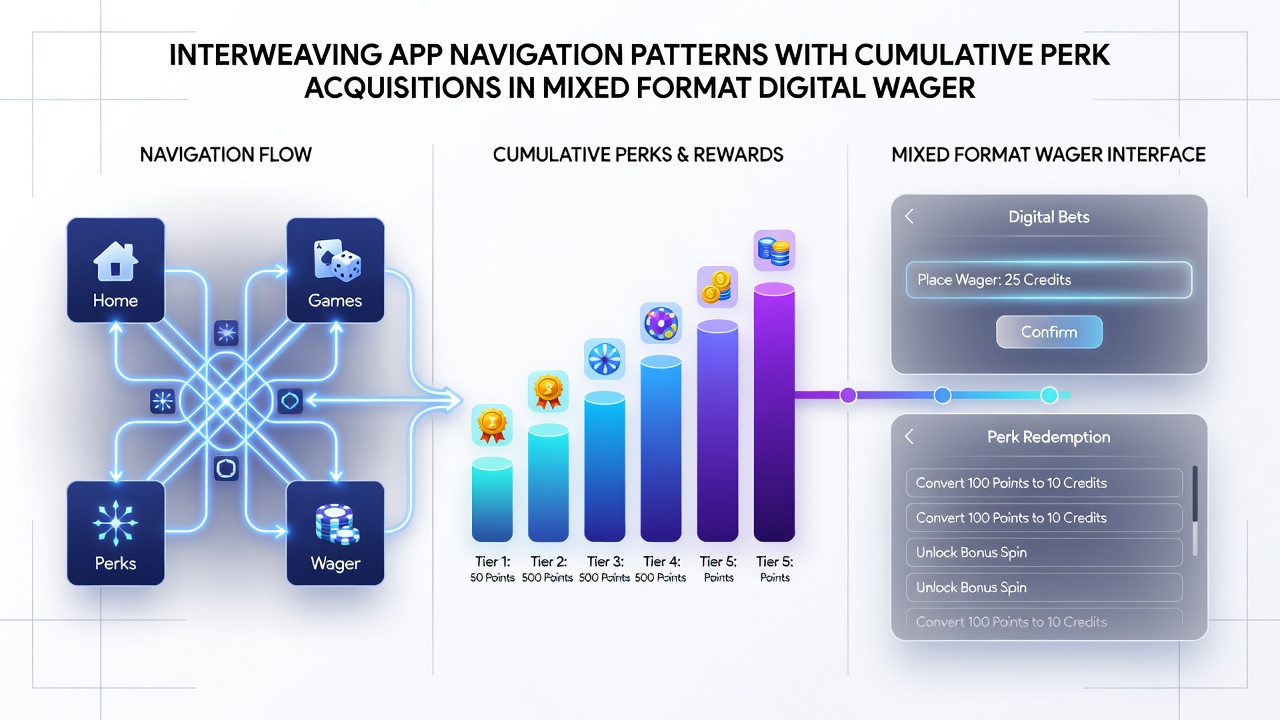
These examples illustrate how navigation elements function as active components within the perk ecosystem rather than passive menus. When a user taps through a sequence of game previews, the system logs each step and adjusts visible milestones accordingly, creating a feedback loop that encourages further exploration. Industry reports compiled by the Responsible Gambling Council of Ontario note that clear visual mapping of these loops reduces instances of abrupt exits during perk accumulation phases.
Regulatory Context and Platform Adjustments
Regulatory bodies in multiple jurisdictions require transparent display of how navigation influences reward eligibility, which has prompted developers to include explanatory tooltips alongside every major menu transition. In regions where mixed-format platforms operate under unified licensing, compliance documentation must detail the algorithms that convert cross-category activity into tier advancements. Platforms scheduled for updates in the latter half of 2026 have begun testing modular navigation components that can be toggled to meet varying disclosure standards without disrupting the underlying perk calculation engines.
Observers tracking these developments point to increased use of A/B testing on navigation flows, with one variant emphasizing vertical scrolling through game types and another relying on horizontal carousels. Both approaches maintain persistent perk indicators, yet they produce distinct patterns of user movement that operators analyze for optimization. Data aggregated across test groups shows measurable differences in how quickly users reach successive reward thresholds depending on the chosen navigation model.
Conclusion
Navigation patterns and cumulative perk systems in mixed-format digital wagering platforms continue to evolve through incremental refinements that tie user movement directly to reward progression. Operators document these linkages through session analytics, regulatory submissions, and interface updates that keep perk visibility consistent across game categories. As platforms incorporate new gesture controls and predictive routing features, the relationship between how users traverse an app and how they acquire ongoing benefits remains a central element of design and compliance efforts.